3.5 hours by car to the sea in the Netherlands, the same amount of time by train to Paris, getting off in Brussels on the way there. After about 6 hours of driving, you can visit the Castle Neuschwanstein. Cologne Cathedral was only 20 minutes away and it takes a little more than 5 hours to get to London. Traveling in Europe, you are used to arriving somewhere. To have a destination. The trip is over quickly, and you focus on exploring cities, sights, parks or museums.
I always had a book, videos or enough tiredness with me, – the way didn’t have much importance. Locally I loved nice hotels, good restaurants, museums, people, culture and yes shopping.
A few years ago I drove almost 4 weeks by car through Canada. We started in Vancouver and then went on to Banff National Park, up to Jasper, down to Clearwater, back up to Prince George, then to the coast to Prince Rupert, the inside passage by ferry, finally back to Vancouver via Vancouver Island.
After we started, I wondered when we would get there. How much time we would spend driving. And I saw signs saying the next gas station wouldn’t be for another 100 miles for the first time in my life, and I could watch myself as my mind tried to process that information.
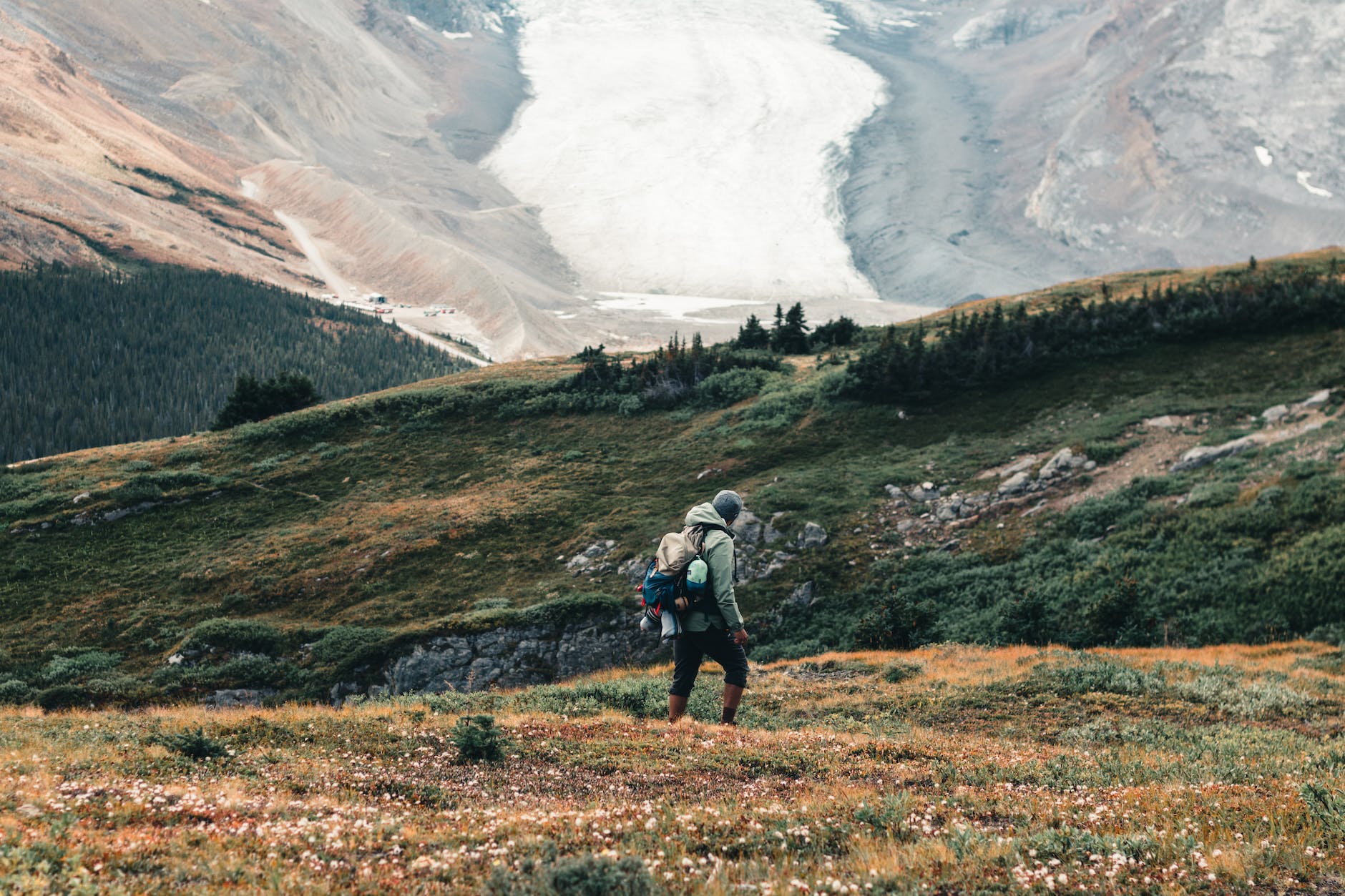
Our hikes took us through fantastic forests where we looked for brown bear scratch marks in the trees. I learned that bear whistles are not necessarily “tourist stuff” and that sometimes you have to cross a highway on foot. We drove for days through landscapes that didn’t change a bit in appearance. We also didn’t “just walk” to the next restaurant. We tried and only our stubbornness and pride kept us from calling a cab after walking for 1 hour (I’m not sure we would have gotten one either).
The accommodations were so different than I had seen before: huge rooms, restaurants with “old fashioned” burgers, breakfasts with eggs, bacon, ketchup and of course pancakes. We had a room, which was in a wooden house that Swiss built and which tried to calm us down by telling us that grizzlies were dangerous and not brown bears.
One lodging was accessible only by a so-called gravel road, was located on a lake and in the middle of the night I woke up thinking that no one, really no one but us was in the immediate vicinity. This led me to see the sunrise, which was really beautiful. An attraction of the day was to see, after 4 hours on the terrace, the beaver that lived in the lake and did not show itself often. I also do not want to forget to say that the chef of this restaurant grilled his only two guests a fantastic steak!
It took us a week to understand that there is no destination. That it’s about the path. We found a music store and filled our ways with Peter Gabriel’s “In Your Eyes,” chatting silly talk, waiting for moose when they crossed the highway in the middle of nowhere. After the first week, we had hit our stride.
We traveled, drove, hiked, laughed, and wondered, but we weren’t going anywhere, in fact we had no destination. We experienced endless vastness.
In the last days of our trip the rhythm changed back again, and the city of Vancouver slowly tuned us back to what we were used to. And at the latest when we arrived in Düsseldorf at the airport and behind us a man grumbled that we should hurry up, we knew that we had arrived back in Germany.
For some years now we have not been living in Europe, but in Washington State, USA, which is very similar to the landscapes in Canada. Sometimes I miss the old destinations. Just taking the train into the city, sitting in the café across from Cologne Cathedral, walking along the Rhine River, and having lunch at the nearby museum restaurant.
On our last visit to Germany, we experienced it as crowded, fast, noisy. We’ve happily grown used to the space, the silence, and the slowness.
There is no destination here – only a path.